Why AirPods Keep Disconnecting

By Suraj Giri, Founder & Publisher. Reviewed by Suraj Giri on .
Published · 7 min read
How this page was made
- Sources. Checked against 14 official pages from Apple and Microsoft, most recently on . See the sources.
- No device testing. We don't test fixes on physical devices, so nothing on this page is a hands-on result. A fact counts as verified only when it matches an official source page.
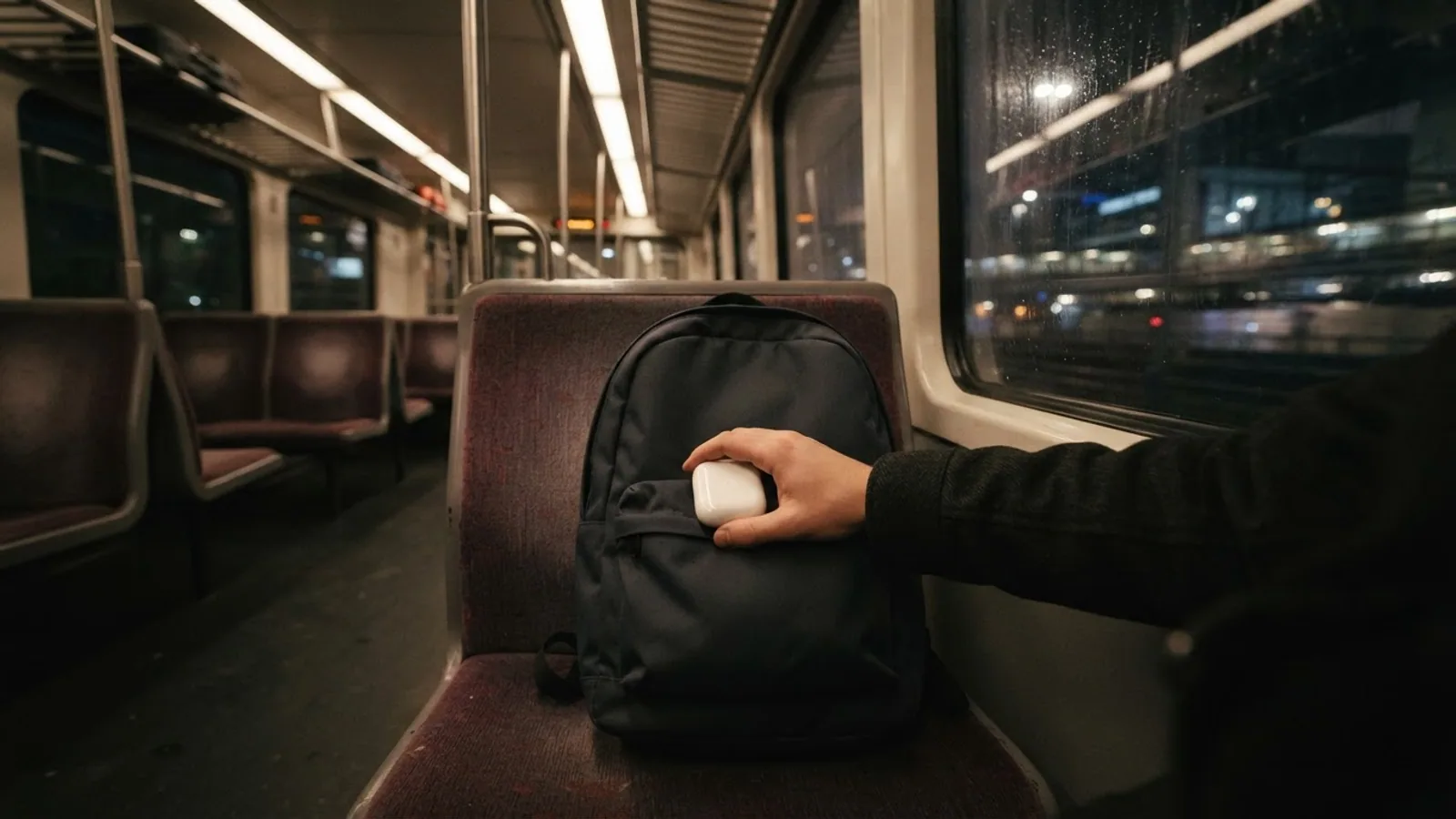
- AI use. As with every page on Gadget247News, AI tools helped research, outline, draft and edit this page, and re-read the official pages to flag facts that didn't match. The illustration at the top was generated with Runway and is labelled under the image.
- Human sign-off. Suraj Giri, Founder & Publisher, read this page and signed it off on . The site won't publish a page without that sign-off.
- Changes. The published and updated dates move only when the content changes, and every change gets a dated note. Spot an error or a fix that didn't work? Email info@gadget247news.com.
Read our AI use policy, editorial policy and corrections policy.
If your AirPods connect and then drop, the cause is different from AirPods that won't connect at all. Six things break a working connection: automatic switching, distance or interference, low battery, Automatic Ear Detection, old software and a stale pairing. For every other AirPods problem, start with AirPods not working.
The fixes below go from settings to a reset, and the reset comes last because it resets your custom settings too. For other brands, see Why Earbuds Keep Disconnecting.
Why Do My AirPods Keep Disconnecting?
AirPods usually keep disconnecting because automatic switching moves them to another Apple device signed in to the same Apple Account. These six causes are ranked from most to least likely:
- Automatic switching: your AirPods disconnect from your iPhone and reconnect to the Mac, iPad or other Apple device you start playing on.
- Distance, walls or interference: Apple names power cables, microwave ovens, fluorescent lights, wireless video cameras and cordless phones as common sources of interference.
- Low battery: one or both AirPods run flat, and a tone chimes right before they turn off.
- Automatic Ear Detection: taking one AirPod out pauses playback, which can feel like a drop.
- Old software: an outdated iOS or AirPods firmware.
- A stale pairing: the connection needs forgetting, or a reset.
Apple's interference page lists "Bluetooth audio skips, stutters, cuts off" among its symptoms, so the same fixes apply when AirPods cut out.
How to Stop AirPods Disconnecting
Try these fixes in order and test your AirPods after each one; stop when they stay connected.
Fix 1: Turn Off Automatic Switching
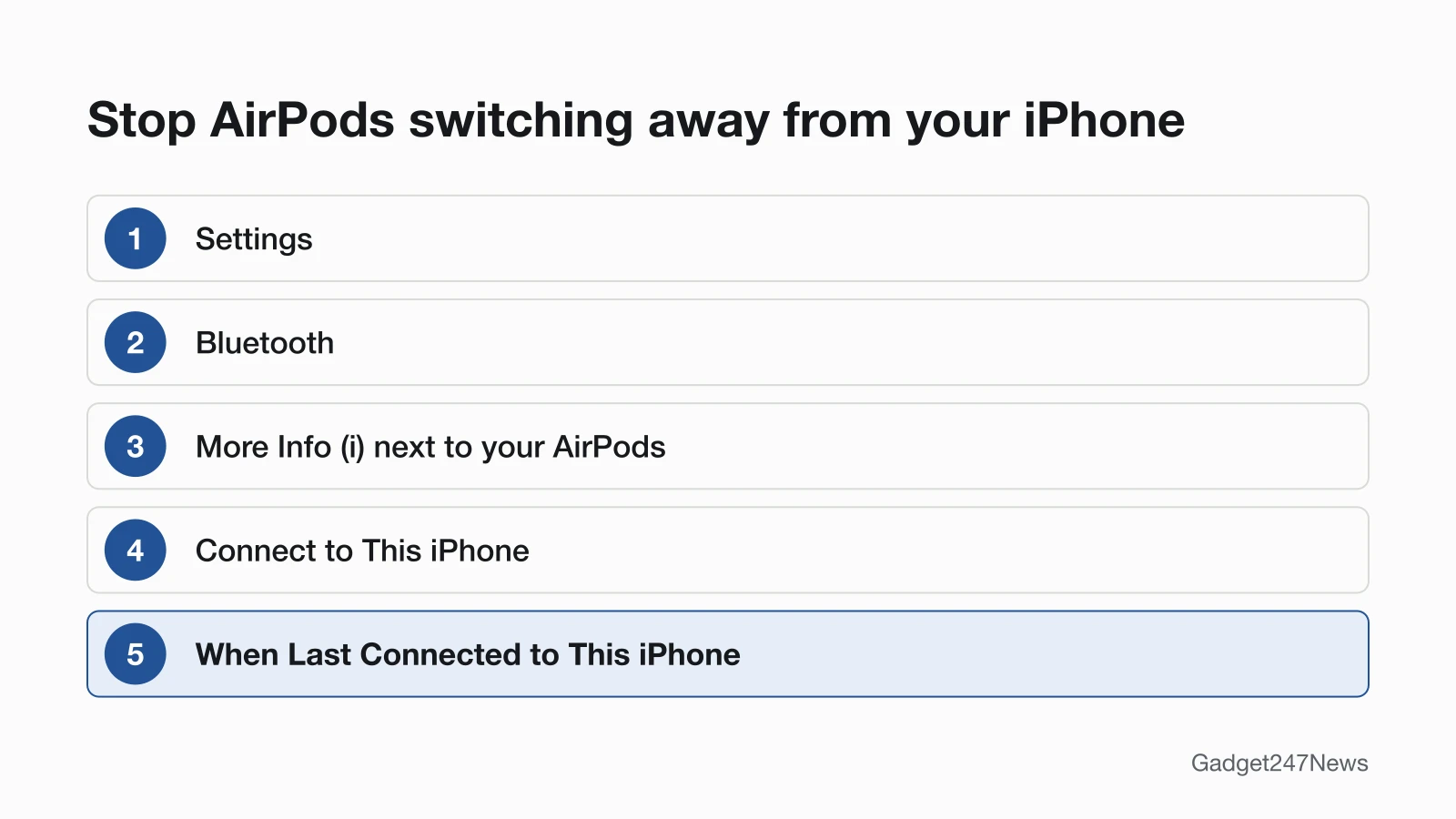
Turn off automatic switching so your AirPods connect to this iPhone only when it was the last device they used:
- With your AirPods in your ears and connected, open Settings, then tap Bluetooth.
- Tap the More Info button (ⓘ) next to your AirPods.
- Tap Connect to This iPhone.
- Tap When Last Connected to This iPhone. To turn switching back on later, tap Automatically.
On a Mac, choose Apple menu, then System Settings, then Bluetooth. Click Options next to your AirPods, and from the Connect to This Mac menu, choose When Last Connected to This Mac.
Apple's switching list covers AirPods 2, 3 and 4 (both models), all AirPods Pro and all AirPods Max; Apple's page, published April 7, 2026, doesn't list AirPods 5. Sound shouldn't switch during a phone call, FaceTime call or video conference. How the feature decides is covered in What Is AirPods Automatic Switching? How to Turn It Off.
Fix 2: Move Closer and Away From Interference
Move your iPhone and AirPods closer together, away from interference, because Apple says interference can make Bluetooth devices disconnect. Apple's steps for a cleaner signal:
- Bring the Bluetooth devices that are connecting to each other closer together.
- Avoid physical obstructions between them: Apple rates concrete high and metal very high for interference.
- Move more of your Wi-Fi devices to the 5 GHz band if your router supports it, because Bluetooth and Wi-Fi both use 2.4 GHz.
Apple's interference page gives no distance in feet or meters for AirPods.
Fix 3: Charge Both AirPods
Charge both AirPods in their case, because an AirPod turns off when its battery runs out:
- Check each AirPod's charge: open the lid, go to Settings, tap Bluetooth, tap the name of your AirPods, then tap the Info button (ⓘ) next to them.
- Put both AirPods in the case to charge them.
Your iPhone shows low-battery notifications at 20, 10 and 5 percent. A tone chimes once at 10 percent and again right before the AirPods turn off.
Fix 4: Check Automatic Ear Detection
Check Automatic Ear Detection when audio stops as you take an AirPod out, because pausing is how the feature works, not a lost connection:
- Wear your AirPods and make sure they're connected to your iPhone.
- Go to Settings and tap the name of your AirPods. If you don't see the switch, tap Audio & Routing first.
- Turn Automatic Ear Detection off to test, then turn it back on when you're done.
With it on, removing one AirPod pauses playback, and removing both stops it without resuming. While you're not wearing them, audio plays through your device's speakers. With it off, all audio plays to your AirPods whether or not you're wearing them, so turn it off only to test.
Fix 5: Update iOS and Your AirPods Firmware
Update your iPhone first, then let the AirPods firmware update install:
- On your iPhone, open Settings, tap General, then tap Software Update, and install any update.
- Let the firmware install: put the AirPods in the case, connect the case to power, close the lid, and keep your iPhone on Wi-Fi nearby for at least 30 minutes.
There's no update button; our guide to the AirPods firmware update shows how to check the version afterwards.
Fix 6: Forget Your AirPods and Pair Them Again
Forget your AirPods on the iPhone, then pair them again, to replace a stale connection:
- Go to Settings, tap Bluetooth, tap the More Info button (ⓘ) next to your AirPods, tap Forget This Device, then tap again to confirm.
- Put both AirPods in the case and close the lid. Wait 15 seconds, then open the lid.
- Put them in pairing mode: press and hold the setup button on the back of the case until the status light flashes white. On AirPods 4, AirPods 5 and AirPods Pro 3, double-tap the front of the case until the status light flashes white.
- Hold the case, with the AirPods inside and the lid open, next to your iPhone, and follow the steps on the screen.
Forget This Device also removes the AirPods from every device signed in to the same Apple Account.
Fix 7: Reset Your AirPods (Last Step)
Reset your AirPods only after Fixes 1 to 6, because your custom settings reset too, and you'll pair the AirPods again afterwards. The steps for every model, including AirPods Max, are on our guide to factory reset AirPods.
AirPods Disconnecting From a Laptop, Android or AirPods Max
The causes change a little with the device, so here are the differences for a laptop, an Android phone and AirPods Max.
Disconnecting From a Mac or Windows Laptop
On a Mac, automatic switching is the usual cause: in macOS Sequoia and later, compatible AirPods can switch automatically between your Mac and your other Apple devices, so use the Mac steps in Fix 1. On a Windows laptop, Microsoft's steps include moving the device closer to your PC. If the AirPods appear in the Bluetooth list but won't connect, Microsoft says to remove them and add them again, with the AirPods in pairing mode (Fix 6, step 3); our Windows guide has the full steps. On any computer, Apple also says USB 3 and Thunderbolt 3 devices can interfere, so move them farther from your AirPods and turn off USB 3 devices you aren't using.
AirPods Max Keep Disconnecting
AirPods Max keep disconnecting for the same reasons, and all AirPods Max models are on Apple's automatic switching list, so start with Fix 1. If they still drop, restart them: charge them to at least 50 percent, then press and hold the listening mode button and the Digital Crown until the LED flashes amber.
Disconnecting From an Android Phone
Apple's automatic switching works only between Apple devices, so on an Android phone focus on distance, battery, and forgetting and pairing again. On Android, Bluetooth is under Settings, then Connections, then Bluetooth. Put the AirPods in pairing mode and select them when they appear in the list. You can listen and talk, but you can't use Siri.

Still not working?
If your AirPods still drop after a reset, work through this order:
- Try the next fix: AirPods not connecting, if they now won't connect at all.
- Reset your AirPods with the steps in Fix 7 (you'll need to pair them again afterwards).
- Contact Apple Support.
- Check repair or warranty options on Apple's official service pages.
Started after an update? Check the Update Tracker for known issues.
Related Problems
These four problems look like disconnecting but have their own fixes:
- Won't connect at all: if the AirPods never connect in the first place, fix AirPods that won't connect instead.
- Keep pausing: playback that stops by itself usually comes from ear detection; see AirPods keep pausing.
- Drops only on calls: call audio is covered on our AirPods microphone page.
- Switches to your Apple TV: Apple's way to stop that is to turn off Suggest Nearby AirPods on the Apple TV; setup is in How to Connect AirPods to a TV.
AirPods Disconnecting: Quick Answers
Three short answers about AirPods that drop out.
Why does my left AirPod keep disconnecting?
A left AirPod usually keeps disconnecting because its battery is low or Automatic Ear Detection paused it. Put both AirPods in the case, let them charge for 30 seconds, then test the left one again. If only that AirPod keeps dropping, use our guide to one AirPod not working.
Why do my AirPods keep cutting out?
When AirPods keep cutting out, check distance and interference first. Apple lists audio that "skips, stutters, cuts off" among the symptoms interference can cause, and names microwave ovens and power cables as common sources. Move closer to your iPhone, keep metal and concrete out of the path, then check the battery.
How do I unpair AirPods?
To unpair AirPods on an iPhone, go to Settings, tap Bluetooth, tap the More Info button (ⓘ) next to your AirPods, then tap Forget This Device. On a Mac, open System Settings, click the name of your AirPods in the sidebar, then click Forget This Device.
Sources
We checked this page against the pages below, most recently on . How we verify fixes
- Switch your AirPods to another device (Apple, support.apple.com)Official
- Resolve Wi-Fi and Bluetooth issues caused by wireless interference (Apple, support.apple.com)Official
- Charge your AirPods (Apple, support.apple.com)Official
- Change the settings of your AirPods and AirPods Pro (Apple, support.apple.com)Official
- About firmware updates for AirPods (Apple, support.apple.com)Official
- Update your iPhone or iPad (Apple, support.apple.com)Official
- If your AirPods or AirPods Pro won't connect (Apple, support.apple.com)Official
- How to reset your AirPods and AirPods Pro (Apple, support.apple.com)Official
- If your AirPods won't charge (Apple, support.apple.com)Official
- Restart, unpair, or reset your AirPods (AirPods User Guide, version 1.0) (Apple, support.apple.com)Official
- Pair AirPods with a non-Apple device (AirPods User Guide) (Apple, support.apple.com)Official
- How to restart or reset AirPods Max (Apple, support.apple.com)Official
- If your left or right AirPod isn't working (Apple, support.apple.com)Official
- Troubleshoot Bluetooth not connecting in Windows (Microsoft, support.microsoft.com)Official